
Why do men leave when the honeymoon is over?
Find out why men leave after the “honeymoon” is over. Learn how to move beyond the honeymoon phase of a relationship and improve or save your relationship or marriage. When the honeymoon is over, it becomes an entirely different phase in the relationship.
We all know that sooner or later the honeymoon is over. Have you gone through the honeymoon phase of your relationship? Is the honeymoon over? All relationships will start in a honeymoon phase. Here, you’ll find help for couples to move successfully beyond the honeymoon stage of a relationship.
Why do men leave women and what to do when the honeymoon phase is over
When couples first fall in love, it is the honeymoon of a new beginning. This is a time of magic and wonder. Hearts open. Spirits soar. It’s like encountering the divine. In this phase of love, in this expansion of our souls, we may feel we have met our soulmate.
Some say the honeymoon is like a spiritual experience. But many say the honeymoon does not last forever. So it becomes important to refine our thinking about soulmates, true love, and what constitutes a soulful relationship.
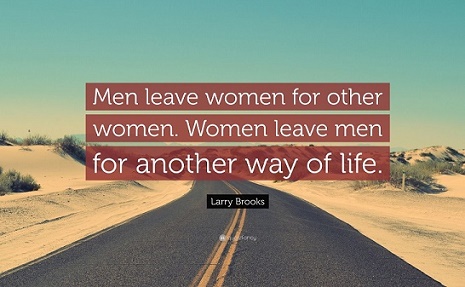 Why do men leave relationships, then? It may last weeks, months, or even years. But the Honeymoon Stage does end. And then another phase of relationship begins… Is “real life” finally entering the equation? Does perfect love somehow just slip away? Sadly, many couples look back at a honeymoon only to feel they lost something, the rest of the relationship never quite measuring up to it.
The honeymoon gives us a glimpse of possibility for a relationship. Our work is centered on how couples can make good on that possibility and turn it into a lasting reality. We offer a model, and a pathway to lasting success. The first step on this path is to understand what happens when the honeymoon ends. This is a critical moment in a relationship. How you respond makes a big difference.
What signals the crossing of this dreaded threshold? What exactly are the signs?
What are the signs and signals when the honeymoon is over
Couples usually declare the honeymoon is over when problems, challenges, upsets or differences arise. These are normally seen as negative signs… signs that something is “wrong”… signs of a “bad” relationship. Most couples will look for the “cause” of these unwanted events. Inevitably, they point the finger at each other. Getting the other person to change is seen as the way back to the wonderful spontaneous feelings of the honeymoon.
This is not a conscious strategy. It is a knee-jerk reaction. Seeing a problem, challenge, upset or differences as a negative sign is the normal thing to do, the conventional wisdom.
Unconsciously, most of us do see things according to the conventional wisdom. We may feel that “differences attract” at first meeting. But after the honeymoon, people normally start to complain about how “unlike me” the other person is. There’s a tendency to see the other person as “wrong” or deficient in character, because they are different.
How does this happen? Let’s look at the underlying process that turns problems, upsets and differences into road blocks to happiness.
When the honeymoon is over: The vicious circle
Money, sex and arguments are at the root of most couples’ discontent …
We call it the Vicious Circle. It starts when a person says or does something, and the other person gets upset. Then that person says or does something in return, and the first person gets upset. Continuing around the circle, they repeat the process.
In a matter of minutes emotions can heat. It can take days or weeks to recover. Here’s an example. This was the defining moment when Sarah and Michael knew their honeymoon was over. They were driving to a meeting that was going to challenge her. She was unusually quiet and inward.
Noticing this, Michael wanted to lighten things up and relieve the tension. He tried to inject a little humor the way he normally did with his friends, by lightly teasing her. Sarah remained quiet, so he continued to try to draw her out by teasing. Suddenly, she blew up and called him insensitive.
Michael reacted with sarcasm, which was not received any better than the teasing had been. He said she was ruining the trip and blamed her for not responding to his good intentions like his friends would have. This gave evidence to the old saying that the road to the Hole is paved with good intentions.
Only minutes had passed and they were going around the Vicious Circle with increasing speed. This was their first fight. They stayed upset over it for a week. The Vicious Circle can quickly turn into a Downward Spiral, and it leads to the “Hole.” As this happens, there are a number of things that couples say or do.
You may hear one person blaming the other for causing the situation. Like, “You make me angry!” You may hear name calling. One person calls the other “insensitive” or “selfish” or some other negative label. There are classic red-flag words… “always,” “never,” “should,” “right” and “wrong”… words that reveal that the mind is narrowing or getting lost in judgments.
Behind such words, the emotional arena has collapsed into a basic reaction of “fight or flight.” There may be anger or pursuit, distancing or retreat. Depending upon the couple, things can get explosive… or stone cold. Couples in the Hole are dominated by their reactivity. The “fight or flight” reaction powerfully alters body-brain chemistry. It’s the chemistry that ancient humans needed to battle or escape a tiger suddenly appearing in the jungle.
In relationship, this chemical reaction fundamentally changes how we talk and act. It is like being very intoxicated. Very very intoxicated. The chemicals have taken over. This is important to realize. When you are in the Hole… you are under the influence. As the brain’s chemical balance shifts in preparation for “fight or flight,” our pulse rate and breathing alters, our perception narrows, and our mental capacity collapses into black and white thinking.
Statements get dramatized and over generalized. You hear things like, “You never help me around here!” “I’m always cleaning up after you!” In the Hole, our positive options are sharply reduced… if not gone altogether. Yet, people keep trying to resolve the situation, as if they could! Each wants to put in the final word. Emotions escalate. Someone may explode or leave.
Most couples can recognize their own version of being in the Hole. One question we have repeatedly asked is: “Has there ever been one time when you were in the Hole and able to work things out in a successful way?”
We have yet to hear a single story of any such success. Nor are we likely to, for a very good reason: solving an interpersonal issue takes skill. Would you do brain surgery if you were totally drunk? Then why try to negotiate an important issue when you are under the influence of the chemistry of “fight or flight”?
Soulmates do not try to solve things if they fall into the Hole. In fact, they avoid the Hole as much as possible. No matter how hard couples try, if they are in the Hole, they only make matters worse. Research has proven that the strategies of the Hole are what destroy a relationship.
Honeymoon Over? Why do mean leave?
Learn how to talk and listen successfully when the honeymoon phase of a relationship is over
Here are the strategies that emerge from people when they are in the Hole after the honeymoon is over:
- BLAME: “You ruined our entire vacation!”
- LABEL: “You are weak!” “You’re such a slob!”
- CRITICIZE: “You’re self-centered!” “You are needy!”
- CAUSE: “You frustrate me!” “You make me upset!”
- DEFENSIVE: “That’s your problem!” “What about when you…”
- STONEWALL: Walk out. Avoid the issue.
- WIN-LOSE: “You’re wrong!” “You never do it right.”
Most of us can recognize one or more of these strategies. They seem like normal things to do when you are upset. But be warned. They dare destructive. Unless you develop different strategies to resolve issues, the strategies of the Hole will either destroy your partnership, or leave you sharing long term unhappiness.
In our consultations, when we first see couples we often hear reports from the Hole. Each partner makes a case for how they are right, how the other person needs to change. We ask them, “Would you rather be right… or happy?” Contrast the strategies of the Hole with the ones below, which are effective in solving interpersonal issues. These are keys for building long-term happiness in love.
Smart couples only attempt to resolve issues when they are clearly outside of the Hole. If they find themselves moving toward the Hole, they will stop and continue later when they can be more resourceful.
We teach couples specific strategies for developing the skills of success. We give them clear ways to avoid falling in the Hole and being under its destructive influence. When they start using these tools, things start moving in a positive direction.
Outside the Hole you can resolve issues
When you deal with challenging issues from outside the Hole, you can be resourceful and this enables you to actually resolve those issues. Here are some of the internal resources you have access to, outside the Hole:
- Instead of trying to LABEL or CRITICIZE your partner, you become curious about what is happening inside of them. Suspending your own judgments, you ask them what is going on for them. You then will learn something new about them, and they won’t feel under attack.
- Instead of putting the BLAME on them for the situation, you see your own part in how things developed. This gives you an active role in changing things, and empowers you to avoid similar traps in the future.
- Instead of making them the CAUSE of what you feel, you own your feelings. Instead of needing them to change in order to fix how you feel, you begin to learn to self-care for and heal your emotional states.
- Instead of getting DEFENSIVE over what your partner may be saying, you listen. You get to understand their viewpoint and learn more about their sensitivities. This helps you avoid hot buttons in the future.
- Instead of starting to STONEWALL or CLOSE DOWN, you open to hear what is true for your partner. They feel heard, understood and accepted as human beings. This is a basic requirement for a relationship to grow and prosper. Instead of being exclusively focused on your own needs and feelings, you can also consider the other person’s sensitivities, as well. Partners who work things out together well have developed a map of each other’s hot buttons and sensitivities. They know how to avoid setting off emotional landmines.
- Instead of a WIN-LOSE outcome, you are interested in finding a mutually satisfactory solution. You will take into account the other person’s needs. This enables you to co-create happiness together on an ongoing and lasting basis.
Unfortunately, a majority of us have not been exposed to many positive strategies for dealing with issues from outside the Hole. We probably did not see many of these constructive ways of relating when we were growing up.
This is one reason that today there are a lot of unhappy couples who mainly deal with issues from inside of the Hole. And it is why our divorce rate is so high.
Until we consciously learn to do something different, we just repeat the relationship strategies we saw or developed in our childhood. Being open to learning and personal growth is the pathway to becoming a successful couple….
source: Beyond The Honeymoon – John Grey, Ph.D. & Bonney Grey, RN
Why men leave women: Fix your relationship when the honeymoon is over
Any relationship can be challenging. It is within the challenge that you will find the most potential! Whatever the stresses and strains on your relationship, Lilly can offer a way forward. She counsels close to 5,000 couples and individuals a year. She is not here to make judgments about the rights or wrongs of relationship difficulties. Her role is to listen, to encourage you to talk openly about your concerns, and help you reach your own decisions about the best way forward.
In a session with Lilly you’ll learn:
- A visualization technique to help you discover the spiritual agreements you have with your loved ones.
- How to update old agreements and clear out stuck places, so you can both have what you need now.
- How to learn what the people in your life have come to teach you. . . . and how to offer them space to grow, too.
- How to pay attention to your own intuition in your relationships
- Most importantly, you’ll be learning a lot about your own relationships and new ways to nurture them.
Tending a relationship is a lot like tending your garden–it grows much better and is more vital when you put your attention on it! So take some time to put some attention back into your relationships.