

Dealing With Change Positively
Learn how to deal with uncertainty and accept change happily and peacefully
Change is inevitable — yet dealing with change can feel unsettling, overwhelming, or even frightening when it disrupts what feels familiar. Whether change arrives suddenly or unfolds slowly over time, it challenges our sense of stability and control. Just as seasons shift without asking permission, life continually asks us to adapt, grow, and respond in new ways.
Coping with change looks different for everyone. Some people welcome change as an opportunity for renewal, while others struggle deeply with uncertainty and loss of direction. Change can be dramatic and life-altering, or subtle and quietly transformative. Often, we resist change not because it is wrong, but because it asks us to let go of what we know — even when what we know is no longer serving us.
Learning how to accept change peacefully does not mean ignoring fear, pain, or discomfort. It means developing inner flexibility, emotional resilience, and the ability to respond rather than react. Real growth happens when we learn to remain grounded even when the path ahead is unclear. As the saying goes, the true measure of intelligence is not how much we know — but how we behave when we don’t know what to do.
If you are facing uncertainty, transitions, or unexpected shifts in your life, this page will help you understand how to deal with change in a healthier, more conscious way — with clarity, confidence, and inner calm.
Staying Open Minded While Dealing With Change
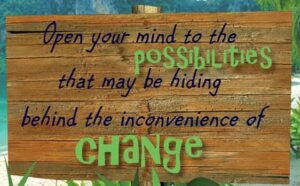
Staying open minded helps reveal the opportunities and growth hidden within change.
Learn to accept change as a positive force in your life
Dealing with change becomes far less overwhelming when you learn to meet it with openness instead of resistance.
Change is not something happening to you or something for you to fear — it is something unfolding for your growth, even when it feels uncomfortable at first.
Every change carries a lesson, an invitation to evolve, and an opportunity to realign with what truly supports your well-being.
Many people sense that change is necessary, yet remain stuck in situations that no longer serve them.
They stay in relationships that drain their energy, remain in jobs that no longer fulfill them, or cling to routines that feel familiar but limiting. Often, it isn’t the change itself that feels frightening — it’s the uncertainty of what comes next.
Accepting change does not mean forcing yourself to like it or pretending it doesn’t feel difficult. It means allowing yourself to move with life instead of against it.
When you stay open-minded, you begin to see that what first appears as an inconvenience may actually be creating space for something better to emerge.
Learning how to cope with change requires trust — trust in your ability to adapt, trust in the skills you’ve already developed, and trust that you have always found ways to meet your needs before.
When you interrupt the inner voice that tells you to push harder, do more, or panic about outcomes, you step out of old survival patterns and into a more balanced way of living.
One of the great paradoxes of personal growth is that when we stop gripping so tightly and allow ourselves to flow with change, we actually become more grounded, resilient, and creative.
By staying open, flexible, and curious, you give yourself permission to grow beyond old limitations and discover new possibilities you may not have seen otherwise.
What Happens If You Don’t Accept Changes In Your Life?
“Change – or you will be changed”
In other words, if you don’t change of your own volition when change is necessary in your life, change will be forced upon you by the Universe (God, Goddess, Spirit) anyway. Change is REALLY, inevitable.
Ah, change – don’t you love it? It’s the one thing that will never let you down. Sometimes we can see it coming and prepare for it. But just as often it sneaks up on us and takes us by surprise.
(And I don’t know about you, but I don’t care much for that!) Still it’s inevitable given all the change cycles that exist in our lives. First there’s birth and death and all the living and growing we do in between.
Then there are the changes we experience in the economy, changes in government, changes in the world. The unpredictability of weather and other forces of nature. Reversals and setbacks in our health, our fortunes, our families. All these things spell changes of some sort or another sooner or later.
Some changes are just downright awful and we wonder why we have to go through them at all. Why do loved ones have to die? Why do people lose their jobs? Why do houses burn down?
Why do traffic accidents happen? Wars, riots, floods, earthquakes, murders. These things are bad news all around and you may be hard-pressed to find anything positive in them.
But they may also force you to stop what you’re doing, to examine your life, your intentions, your path. Where are you going? What do you really want out of life?
Are your actions taking you in that direction? Serious change forces you to take time out, to think, to contemplate, and to consider what is really important to you.
Whatever you decide will require that change take place. Can’t avoid it. Can’t get around it. But such change is not necessarily for the worse. And something good will always emerge from it.
Strategies for Coping with Change in Your Life
Practical tips for dealing with change
Acknowledge Your Emotions
Change often brings a mix of emotions such as sadness, anger, fear, or uncertainty. Allow yourself to feel what comes up without judgment. Journaling, talking with a trusted friend, or simply pausing to name what you’re feeling can help you process emotions rather than suppress them.
Reframe Your Thoughts
Notice the stories you tell yourself during times of change. When negative patterns appear—such as “I can’t handle this” or “I don’t deserve better”—gently challenge them. Shift your inner dialogue toward solution-focused thinking by asking, “What can I learn from this?” or “How can I make this easier for myself?” Awareness is the first step to changing thought patterns.
Give Yourself Space to Reflect
Many people rush through change without acknowledging what they are leaving behind. Taking time to reflect or grieve a loss—whether it’s a relationship, routine, or role—can bring emotional closure. Writing, creative expression, or meaningful conversation allows you to honor the transition instead of numbing it with distractions.
Focus on the Present Moment
When facing uncertainty, the mind often jumps ahead to worst-case scenarios. Gently bring your attention back to what you can manage today. Completing small tasks, maintaining simple routines, and recognizing small wins helps ground you in the present and reduces overwhelm.
Practice Gratitude
Gratitude does not deny difficulty—it balances it. Noticing what remains stable, supportive, or meaningful in your life can foster optimism. Whether it’s a supportive conversation, a peaceful moment, or something beautiful in nature, small moments of appreciation can reset your emotional state.
Even in difficult moments, focusing on small positives can ease emotional strain. Writing in a gratitude journal, sharing daily highlights, or simply pausing to notice beauty around you can help restore balance and perspective during times of change.
Plan Ahead When Possible
If change is expected, preparation can reduce stress. Consider potential outcomes and think through realistic responses. Having a loose plan—rather than complete certainty—creates a sense of control and confidence when change arrives.
Maintain Familiar Routines
Structure offers comfort during uncertain times. Keeping familiar routines, such as daily walks, regular meals, or bedtime rituals, helps create stability and emotional safety while other aspects of life shift.
Create Comfort and Self-Care
Make space for activities that calm and restore you. Listening to soothing music, meditating, exercising, or taking a warm bath can help regulate stress. Choose healthy coping methods and avoid numbing emotions through harmful behaviors. Asking for support—from friends, family, or a professional—is a sign of strength, not weakness.
Frequently Asked Questions About Coping & Dealing With Change
Embracing Change Positively as a Path to Growth
Dealing with change is not about forcing positivity or pretending uncertainty doesn’t exist — it’s about learning how to move through life with flexibility, awareness, and self-trust.
When you accept change instead of resisting it, you create space for growth, clarity, and new possibilities. By coping with change one step at a time, staying open-minded, and grounding yourself in the present, you can meet life’s transitions with greater peace and confidence.
While dealing with change positively remember to:
Be Kind to Yourself: Don’t expect to adapt instantly; acknowledge your efforts and give yourself grace.
Look for Opportunities: See transitions as chances for growth, new goals, and discovering hidden strengths.
Find Balance: Incorporate enjoyable, stress-relieving activities alongside necessary changes.
Change will always be part of life, but how you respond to it determines whether it becomes a source of stress or a catalyst for meaningful transformation.