

Help letting go of a relationship
Holding onto someone you’d like to be free of? Need help letting go of a relationship? A very good indicator of wisdom, positive attitude as well as sound mental health is found in our capacity to let go. Get help letting go of a relationship when it’s REALLY over. Letting go will lift your Spirit, cleanse your mind, and replenish your soul.
Life is a series of choices of how to behave. Often we make these choices automatically, without really being aware of what we are choosing or why. No matter who left who, if you loved him or her, you’re hurting. There’s no point in denying it and no future in wallowing in it.
Letting go of a relationship with a narcissist? If you’re feeling frightened about what comes next… Don’t. Embrace the uncertainty. Allow it to lead you places. Be brave as it challenges you to exercise both your heart and your mind as you create your own path towards happiness. Don’t waste time with regret. Spin wildly into your next action. Enjoy the present – each moment as it comes – because you’ll never get another one quite like it. And if you should ever look up and find yourself lost, simply take a breath and start over. Retrace your steps and go back to the purest place in your heart, where your hope lives. You’ll find your way again. There are NO letting go of a relationship spells!
Help Letting go, releasing and moving on!
Experiencing pain from an estranged relationship or troubled marriage? Try the exercises given here to gently release the cord attachment to free yourself of continued feelings of sadness or separation. Letting go is simply making a decision – no longer to allow something from the past to influence your life now or to reduce your inner sense of peace and well-being.
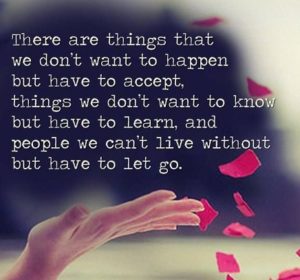
Coping with letting go after the the break up of a relationship?
What letting go is and isn’t
To let go isn’t to forget, not to think about, or ignore. It doesn’t leave feelings of anger, jealousy, or regret. Letting go isn’t about winning or losing. It’s not about pride and it’s not about how you appear, and it’s not obsessing or dwelling on the past. Letting go isn’t blocking memories or thinking sad thoughts, and doesn’t leave emptiness, hurt, or sadness.
It’s not about giving in or giving up. Letting go isn’t about loss and it’s not about defeat. To let go is to cherish the memories, but to overcome and move on. It is having an open mind confidence in the future. Letting go is learning and experiencing and growing. To let go is to be thankful for the experiences that made you laugh, made you cry, and made you grow.
It’s about all that you have, all that you had, and all that you will soon gain. Letting go is having the courage to accept change, and the strength to keep moving. Letting go is growing up. It is realizing that the heart can sometimes be the most potent remedy. To let go is to open a door, and to clear a path and set yourself free.
Help letting go after a break up – letting go of past loves
Taking responsibility for our own lives
It’s amazing what we’ll go through to avoid being alone or to postpone the unpleasantness of a breakup. The breakup of an intimate relationship is certainly one of the most difficult of life’s experiences. For most people, the process of letting go of a person with whom one has been in love is a period of extreme uncertainty and confusion. The Language Of Letting Go offers a unique approach to dealing with the pain of separation.
For many people, Love is the greatest obstacle to letting go. But The Language Of Letting Go demonstrates how it must be understood that once we let go, the love which we originally felt is now of a different nature. Love is the primary force which leads us into a relationship and it is also the primary force for leading us successfully out of a relationship. It is learning how to change the form of love which offers the individual the power to transcend suffering and to begin on the path to fulfillment in life.
Healing through letting go of a relationship
Letting Go. Releasing. Moving on.
These are words that come to mind when holding on to the status quo becomes too painful or takes too much energy. Even when we’re ready, it’s seldom easy to let go. But when we do, both we and the other person can become the people we were meant to be—loving without feeling we must control or be dependent on the other for our happiness.
The healing and release we feel when we’re finally able to truly let go can’t happen, however, until we allow a shift to occur within us, until we’re ready for a new way of looking at things, a perspective that is expressed very well in the poem called” What is Letting Go?”.
What is Letting Go?
To “let go” does not mean to stop caring. It means I can’t do it for someone else.
To “let go” is not to cut myself off. It’s the realization that I can’t control another.
To “let go” is to admit powerlessness, which means the outcome is not in my hands.
To “let go” is not to try to change or blame another. It’s to make the most of myself.
To “let go” is not to care for, but to care about.
To “let go” is not to fix, but to be supportive.
To “let go” is not to judge, but to allow another to be a human being.
To “let go” is not to be in the middle, arranging all the outcomes, but to allow others to affect their own destinies.
To “let go” is not to deny, but to accept.
To “let go” is not to nag, scold, or argue, but instead to search out my own shortcomings and correct them.
To “let go” is not to adjust everything to my desires, but to take each day as it comes and cherish myself in it.
To “let go” is not to regret the past, but to grow and live for the future.
To “let go” is to fear less and to love more.
The art of letting go – how to let go of a long term relationship
Very few people have gone through life without having experienced the difficulties involved in the breakup of an intimate relationship. Those who have evaded this painful state of confusion are perhaps unique in this day and age. For those who are living through the experience of separation, The Language Of Letting Go can bring solace, understanding, strength and the building blocks necessary to return to happiness in their lives.
The art of letting go presents a clear and caring approach to those meaningful ideas and concepts which are essential to strengthening one’s desire and determination to create a positive future. To aid the reader’s comprehension and confidence in this unique catharsis, the author has included an extensive self-awareness section and an engrossing meditation. The result is a fully-integrated reading experience designed to enlighten and revitalize.
Within the covers of this book lies a treasure of meaning and feeling that can bring a wealth of satisfaction and direction to anybody’s life. The Language Of Letting Go is an outstanding book which speaks with remarkable sincerity and clarity to an audience of the most varied background and ages. The Language Of Letting Go, to put it simply, is a book to be savored, used, and shared.
What does letting go of a relationship mean?
What do those two words mean to you? Letting go. To some, letting go is a means of coping with the complexities of life. To others, letting go is their last resort when they feel that they have been agonizingly beaten by what they thought of as the irreversible hand of fate.
For example:
I have seen many a parent ruin their son’s or daughter’s life by refusing to acknowledge that, at a certain stage, the child has become and adult. The mother or father continues to protect, shelter, and provide for the growing son or daughter unnecessarily. The parent becomes a hovering shadow, subtly interfering and manipulating. Yet the same mother or father is really just trying “to love in the best possible manner.”
At least that is their intention. But is it the best possible manner of loving? Loving, if not accompanied by letting go, becomes tyrannical, designed to hold the person in an invisible prison with invisible chains and walls. Holding on is stifling, enslaving and destructive. Letting go is liberating, accepting, and constructive.
Our natural propensity is to want to have control over a big chunk of our life. Although we are aware that there are circumstances beyond our control, we nonetheless attempt to construct an order or system to make us feel we are in control.
To get hold of ourselves, we meticulously schedule our activities and we plan our life ahead in terms of years–when to get married, when to have children, when to have a car, and the like. We cannot afford to slip. Life is precious. Time is running out. We are reluctant to effect major changes in our life because changes are risky and offer no certainty.
We cling to some persons as though our very life depends upon them. We become bewildered and lost if they leave and we feel ourselves losing grip of what was once a secure relationship. We hold on dearly to the way “things have always been” without realizing that we’re no longer living in the present but are caught up in the past. The more we cling, the more our world becomes smaller until we find that we are living a crustacean existence, unmindful of the vast ocean, aware only of our own tiny space in which to coil complacently.
Letting go is almost always painful. I remember when I had to leave my then four-year old boy for the first time in school. He was so miserable I could hear his cries even when I was already outside the school. Although it pained me, I had to leave him because that was best for him at that time. Now, that same boy, already almost 17, is self-made. Thanks to the many moments of letting go, albeit painful, he is now self-assured and autonomous.
Letting go also means letting people be, no matter how unreasonable, crazy or wrong they appear to us. We cannot and should not mold people according to what we want them to be. If we do, we steal from them their preciousness, their uniqueness, as well as their freedom of self-determination. It is one thing to guide or assist. It is another thing to control or dominate. If our advice falls on deaf ears, then let it be. If they become stupid or downright ignoble, it is their choice. And although we might not understand, at least we respect them in spite of themselves.
Letting go releases us from the encapsulation of our negative emotions–hate, resentments, jealousy, bitterness and a host of non-contributive feelings. When we learn to let go, we begin to look at those cumbersome negative emotions in a new light: we don’t have to be enslaved by them. By letting go, we learn that when we hate, get jealous or become bitter it is not because some people made us feel that way but rather because we allow them to make us feel that way.
Letting go means confronting these feelings and realizing that by continually nursing our wounds and pains we don’t become better persons but rather we become our own enemies. When we let go of these ill feelings, we free ourselves and we can then recognize our worth as persons. At the same time, we can, at that moment, see the pettiness of it all. Only then can we become bigger than our heartaches and problems.
It took me quite a time to accept that my father was dead. I was then nine years old and for a child’s mind death was a puzzle. I kept consoling myself for days that my father would come back, would bring me a lot of goodies the way he used to, and would again hold me in his arms. Slowly, almost imperceptibly, I became aware of my own solitariness until it dawned on me that my father would never come back. When I was able to let go, I began to play again and to smile. I had to surrender my father so I could live again.
Letting go also means forgiving ourselves and others. We all make mistakes, sometimes intentionally, sometimes not. We all have stories to tell. The wrongs that we commit at times, no matter how simple or grievous, can be a source of uninvited guilt or an awakening. “If only I could turn back the clock, I would have chosen differently.” But there’s no turning back anymore.
There is only a moving on. We just have to let go of the sorrow and forgive ourselves, to hope that there have been lessons learned along the way, to pray that we become better persons, and that we can right the wrongs we have done. Letting go is allowing ourselves, unafraid, to confront that which cannot be undone anymore and to take heart that we can still do otherwise.
At most, letting go is really a matter of being more loving and kinder to ourselves and others, within the horizon of what we can be and cannot be, of what we can do and cannot do–to the best of what we are and who we are. Letting go is best expressed in the oft-quoted prayer: “Lord, grant me the serenity to accept the things I cannot change, the courage to change the things I can, and the wisdom to know the difference.”
The process of letting go
Renewal is a natural process that starts with letting go. For some, that means letting go of their external reality, by leaving a job or career. The ending can be voluntary or involuntary. For others, it involves letting go of the hopes, fears, dreams and assumptions that they attached to themselves. It means letting go of a model of seeing oneself and the world, not just the old arrangements.
Without letting go first, one cannot embark on a new beginning. Therefore an important question to ask oneself is; “Exactly what do I need to let go of?” Specificity is important for a clear, clean closure. Another important question to ask is; “What is over now and what isn’t?” Understanding what isn’t over is just as important to understanding what is.
Giving oneself time and space to grieve losses associated with endings is an essential task of the transition process. It is important to recognize that the loss of a job or relationship, can trigger other important losses including:
- loss of belonging
- loss of identity
- loss of self-esteem
- loss of income
- loss of a social network
Don’t underestimate the impact that ending your work can have on your entire well-being. Sometimes it can be helpful to sort through these losses with a trained counselor.
Neutral zone
The only way to discover true renewal, is by experiencing the emptiness that is left when we let go of something. Without this empty space or neutral zone, we invariably recreate a similar version of what we left behind.
This second phase of transition is where the deep renewal work is done. Many experience great anxiety and confusion during the neutral zone because this is the time when the old has fallen away, but the new has not yet manifested.
Our sense of meaning, purpose and identity is not yet clear. Some are tempted to prematurely foreclose on their options and escape their uncomfortable feelings by making career decisions to quickly. However, there is great value in not knowing what’s next.
This is a time to convert confusion into creativity by giving ourselves permission to redefine our values and mission.
Some tips for navigating the letting go neutral zone
- Do some personal writing
- Re-evaluate skills, interests, values and personal style
- Seek the support of a professional counselor
- Connect with others
- Exercise on a regular basis
- Try some volunteer work
- Take a personal retreat
Beginnings AFTER letting go
True beginnings always start from the inside. When we are ready to make a beginning, we will shortly find an opportunity. The first hint may come in the form of an idea, an image or even a dream. It can involve a chance meeting with someone or an unplanned event.
Be prepared for the unexpected
This third stage of transition can be an ideal opportunity to reflect on what areas you might want to explore next. Spend some time answering the questions below to help shape your work direction.
Questions to ask yourself for a new beginning after getting help letting go
- What am I completing in my life?
- What am I ready to let go of?
- How can I be of service using my unique talents?
- What am I doing when I feel most myself?
- What would I do if money were no longer an issue in my life?
- What matters most in my life now?
- What changes would I have to make to get what I want?
- What kind of person do I want to become?
- What are my strengths?
- What are the obstacles that get in the way of having what I want? How can I address effectively address them?
Conclusion
True renewal, unlike simple change, is a natural process that transforms us. It starts with acknowledging and letting go of outmoded ways of being. It then means living in the empty space of not knowing – making way for something new that is emerging within us.
The neutral zone phase of the renewal process takes courage and patience to sit with the paradoxes of our lives. Until we have given time for inner exploration, we often don’t recognize a new opportunity that might be right for us. When we embark on this journey, it gives us energy and a new sense of purpose.
Ten tips to navigate transition when letting go is necessary
- Acceptance. Some transitions are welcomed and some are not. Either way, recognize that you are engaged in a transition. Acceptance invokes your personal power to successfully navigate it.
- Imagine the best. Visualize in your mind the ideal outcomes of the transition (including the harmonious good of all concerned). Continue to build your vision and add the feeling of it within the vision. Building up this feeling state is key to building a future that pulls you toward it, versus you struggling toward it.
- Seek and accept support. Meet with a , friend, advisor, or therapist on a regular basis to keep you grounded. They can provide a safe space for you to vent, be fully heard, validate your experience, brainstorm ideas, maintain perspective, and simply be yourself.
- Look for the unbidden opportunities. In the Chinese language, two characters compose the word “crisis.” One character represents danger and the other represents opportunity. Even the unwanted transitions can work for your good by presenting opportunities for you to shine, but you’ve got to recognize them as they come along.
- Watch your language. Observe your spoken language and the self talk in your head. Is it positive or negative? Does it express blame or creativity? Is it destructive or constructive? Is it rooted in fear or love? Does it look backward or forward? Positive, creative, constructive, and loving language – spoken or thought – makes all the difference for you in your experience of riding the tide of transition and the results on the other side.
- Engage your daily habits. Select and practice daily habits that support and energize you. They serve as your pillar of stability through the changing times.
- Evolve. You are most likely back on a learning curve. Make it OK to be a beginner again. It’s how we grow and transform. You will inspire others.
- Treat yourself right. Navigating transition requires extra energy. Ensure that you take care of your body and soul more diligently than usual. Don’t forget the extra treats for yourself, you deserve them.
- Release the past. Honor what has come before, learn from it, and let it go; acknowledge the present, and give thanks for your future.
- Be patient. Transitions are the stuff of the cycles of life. We can trust that the process of life moves for our good. Ben Sweetland said, “Success is a journey, not a destination.” Be assured that it won’t be your last adventure through transition. Whenever we get “there,” there will be someplace else to go. Anticipate an ever-changing journey to your future.
Spiritual Counseling is an ideal tool to use to navigate through transitions. It’s benefits include having a guide to remind us of what is so, keep us motivated, keep our eye on what’s on the other side, and to remind us that we’re growing through the transition. Someone who celebrates your evolution.
Considering the consequences of not “letting go” makes us realize the importance and inevitability of this process, if a relationship is to progress beyond a fruitless clinging on to yesterday.