

What Are Dreams, Really?
Understanding the meaning and purpose of dreams
What are dreams and why do we have them? Dreams are doorways to the subconscious, pathways to the spirit realm and keys to the future. Why take an interest in your dreams? Because your reams are more than random fragments spun from your waking life. Pay them proper respect and attention and they will reward you with a greater understanding of yourself and your world as you see it.
What could dreams possibly contain that would interest you, or have some value to you? The answer to why we dream is simple really. Dreams are a part of your life and your inner truth. They are a self-expressing part of yourself, in a medium that is rich with experience on many levels which transcend ordinary existence.
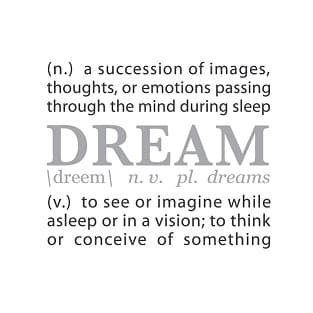
Dreams are inner experiences made of images, thoughts, and emotions that arise during sleep.
Why Do We Dream?
Discover why dreams happen and what they mean
Dreams are free, harmless and entertaining. They can be educational, emotional, or just plain fun.
They open doors that go past the entertainment/fantasy section of your consciousness and embark on great spiritual journeys in your own psyche.
And the only thing that holds you back is yourself.
Since dreaming occurs whether you want it to or not, may as well take control of them and have some fun. You should never be frightened of dream content.
No matter how sick, scary, twisted or demented a dream may appear, good lucid dream control techniques can instantly change unwanted dreams into something which gives you a good story to talk about in the morning.
What Are Dreams Made Of?
Learn where dreams come from
What are dreams made of? Dreams are series of thoughts, images or emotions occurring during sleep. Dreaming is a universal and powerful experience. All humans sleep, and all humans dream.
Dreams can be fleeting fragments of images or entire complicated narratives unreeling like movies before the mind’s eye. The visions can appear benign or soothing, or they can inspire heart-pounding terror. They can be peopled with friends and loved ones or commanded by horrifying monsters.
Dreams can mimic reality or create a totally surreal environment. They can be clear and detailed or jumbled and confused. They may impart wisdom or knowledge, or they may leave the dreamer completely baffled by their content.
What Dreams Are Made Of (Ingredients)
Dreams are a mix of your daily experiences, emotions, and memories, woven into surreal stories by your brain during sleep, primarily REM stage, using self-generated sensory input, thoughts, emotions and subconscious processing, often featuring vivid visuals and sounds sometimes with other senses, acting as a way for the brain to sort information and consolidate memories.
How Dreams Are Formed
Dreams are not random events but the result of specific processes that occur while the brain is asleep. Different stages of sleep, internal brain activity, and memory processing work together to generate dream imagery and narratives. The sections below explain the key mechanisms involved in how dreams take shape.
Why Dreams Can Be Strange
Dreams are strange because the brain’s emotional centers are active while logic is dampened during REM sleep, leading to bizarre memory mixing. Factors like stress, diet, medications, or routine changes can also actively fuel this creative, sometimes nonsensical, dream-making process.
Dreaming helps us process emotions and consolidate memories in unconventional ways. It’s the mind’s way of “spring cleaning” or “problem-solving” with illogical scenarios.
Dreams often feel unusual, illogical, or surreal because they occur in a state of consciousness that operates very differently from waking life.
During sleep, the brain is free from many of the rules that govern rational thought, allowing images, emotions, and memories to blend in unexpected ways. The following factors help explain why dreams so often defy logic and familiarity.
The Significance That Dreams Hold
What are the meaning of dreams?
The variety of answers set forth to these questions over time reflects the values and the social and psychological structures of various cultures. Ancient peoples, among them the Egyptians and the Greeks, believed dreams were messages sent by the gods to sleeping minds.
The father of modern psychiatry, Sigmund Freud, thought that dreams, created by the human brain, could serve as windows into the psyche, revealing a cache of wishes unfulfilled, and many of his followers today consider such visions to be a major tool in psychoanalysis.
On the other hand, some scientists have theorized that dreams are unnecessary bits of information being expunged nightly from a person’s memory, just as a computer’s files are cleaned of unwanted data it has downloaded.
The ancients regarded sleep as a second life, a life in which the soul freed from the body was supposedly much more active than during the waking state.
And researchers into the paranormal, in some ways echoing the ancients, believe dreams may have a psychic element, revealing the forces of destiny, the reality that is about to happen.
The Interpretation Of Dreams
What are the meanings of your dreams?
Here on this site, you can read the latest articles articles about dreams and dreaming, explore the world of dreaming, learn about the role of dreams in history and culture, and connect with other dreamers worldwide — to share dreams, to network, or to exchange ideas.
Before you delve into interpreting your dream, it will help to understand some important points about dreams so you can use your dream life to discover more about your inner self:
- The dream world is not separate from the waking world; they are extensions of each other and are mutually supportive and co-creative
- Everything you do in dreams is real; it’s just happening in other dimensions of your awareness
- It’s normal for your awareness to constantly shift through all the dimensions; you change focus continually, day and night
- Dreamwork is a way to discover what your whole self, the you beyond your logical mind, is doing
Dreams and Consciousness
It is important to understand the nature of reality, and how dreams and consciousness relate to every experience you will ever have. Its not that hard to realize that thought and reality are related, that our thoughts for the longest time have driven our lives from mechanically hammering out technology, buildings, or from a more liquid stream of dreaming. Where did all that technology come from?
Why do we struggle in darkness when we are full of light? My life isn’t just about triangles and dreams, we have fallen so deep into spiritual darkness that the damage caused to us is evident throughout our Earth, our minds and our dreams.
Since I can remember, I have always known certain basics about life. Something more inward and built into what I am as a sentient being. There is a past stream of memories I have, a powerful all present now that I occupy, and a gray future that I wake up to in my dreams. I have seen it all, the birth and death of entire universes.
The unfolding drama of life and death, the spiritual backdrop hidden from most, lost to forgetfulness of physical incarnation. I exist in a universe that is, not in a universe that is not. There is more to life then just a body that dies with time. I am just reclaiming what is rightfully mine, my spiritual heritage.
There is one truth, and only one truth. That truth is, we exist. Always have, and always will, in one form or another. All parts of one whole, one truth, one absolute, one universe, one God. Everything else is just an extension of us. How many times must you live and die before you wake up to realize that something is wrong?
That you have been lied to your whole life, that science doesn’t have all the answers. That there is more to life then what you physically see. Do you love and embrace war? Do you like killing parts of yourself? Every action has a consequence, every life a purpose. Who you kill and torture “here”, will be you “there” from that there is no escape. We are all one. So learn to love, live in truth and embrace life, don’t destroy it.
Dreams Are Soul Talk
Dreams are an easy and natural way to pursue spiritual enlightenment. A pathway to your Soul. The traditional concept of “Soul” is that you have one, but that it is distant from your everyday life and will become important only when your physical body ceases to exist.
I believe that each person is Soul and that It is the essential and permanent center of our being. It can never be lost. We can, however, forget who we are. Our physical senses and emotions become overwhelming, and we lose Soul’s spiritual viewpoint..
Dreams are records of our travels. We all travel Out of Body. Most just don’t remember it. We also travel through other peoples mind fields. That is why dreams are muddled. It is not all your stuff.
It is many peoples stuff, all mixed up and on different layers and levels and it is in symbolic form. Your symbolic form, not like a cookie cutter symbols out of a book.
Each person translates energies according to their experiences. The feelings we experience in our dreams are what is meaningful about them.
The images and events that occur in our dreams are expressions of those feelings. “I’m in a speedboat. Someone else is driving. They are being reckless and I’m afraid. I tell them to slow down and be more careful.” This is a dream about not being in control. Perhaps someone else is calling the shots in our life.
Perhaps it is an aspect of our own personality – our anger or our bravado – that is making the critical choices that affect our safety and happiness. Not only does this dream afford us a clear vision that someone else (or something else) is controlling our current situation; we also catch a glimpse of our True Self – intelligent, aware, and sensibly concerned for our own well-being.
We Are All The Artists of Our Own Dreams’ Meanings
Dreams are not some black and white two-dimensional setting that we act chaotic and silly in. Mind you, we all have dreams where the content is best left in the shadows of our forgetful memory.
It’s probably because the artist didn’t bother to inspire the content. You weren’t interested in picking up the brush and painting the colors, sounds, and textures needed to make the dream aesthetically pleasing.
Dreaming is a great medium to express artistically, in a multi-dimensional form. Treat your dreams like a movie where you are the director, the special effects crew, the actor, and the camera all happening instantly and simultaneously with little or no effort at all. You don’t have to be an artist to be a good dreamer. This is a talent we all naturally have. It’s a function of our very existence.
Our dreaming minds are capable of re-creating familiar scenes and familiar persons with great clarity and incredible attention to detail. We can also create in our dreams original – even extraordinary – places, events, and situations without the least bit of mental effort. There’s no such thing as writer’s block in the mind of a dreamer.
Words, sounds and images flow in a torrent from our unconscious, mimicking reality so convincingly that we rarely know that we are dreaming while we’re fully caught up, emotionally and intellectually, in the imaginary reality of the dream. But there’s more to the art of dreaming than just painting perfect pictures.
There’s a profound, mysterious, insightful wisdom working behind the scenes in our dreams, trying to lead us out of our pain and confusion, out of our bad habits and insane behavior; trying to inform us who we are and what we need to do in our waking lives to become healthy, happy, free and secure.
Like great art, it is the moral and intellectual content of dreams that makes them worthy of our serious consideration, not their “mere” ability to create fully realized imaginary worlds.
Although entertaining at times, dreams also carry a much deeper meaning. Spirit guides will often use the dream state to speak with us. It is at this time that we are most susceptible to the normally unacceptable.
If a spirit were to appear during waking hours, most people would be in a state of shock and disbelief, whereas in the dream state anything goes.
This is because dreams do not threaten our ridged sense of reality, as we are more able to grasp spiritual concepts, our dreams become less parable like, and more spiritually enlightening.
Frequently Asked Questions About Dreams
Why Dreams Matter
Making sense of the dreaming mind
Dreams offer a unique window into how the mind processes experience, emotion, and meaning while we sleep.
Whether viewed through a scientific, psychological, or personal lens, they reveal the brain’s remarkable ability to integrate memory, sensation, and imagination into living inner worlds.
By paying attention to dreams, we gain insight not only into how they are formed, but into how we make sense of our lives, our feelings, and ourselves.