

How To Open Your Third Eye
What opening your third eye really means
Opening your third eye is often described as a process of developing deeper awareness, intuition, and inner perception through intentional spiritual practices.
Across many traditions, this development is approached gradually through meditation, breathwork, focused attention, and mindfulness rather than sudden or forced techniques.
The goal is not to escape reality, but to become more aware of internal signals, subtle impressions, and intuitive understanding. Rather than producing instant results, third eye practices encourage balance, patience, and consistency.
Over time, they can support greater clarity, heightened awareness, and a stronger connection to your inner guidance when approached responsibly and without expectation.
What Is the Third Eye?
The third eye is a symbolic center of intuition, perception, and inner awareness, commonly associated with the ajna (brow) chakra, located between the eyebrows.
In spiritual traditions such as Hinduism and Buddhism, it is viewed as a gateway to higher awareness and deeper understanding beyond ordinary sensory experience.
While often linked symbolically to the pineal gland, the third eye is not a physical organ of sight. Instead, it serves as a focal point in meditation and spiritual practice, representing insight, clarity, and intuitive perception.
Developing awareness of the third eye is traditionally associated with increased self-awareness, focus, and a deeper understanding of one’s inner experiences rather than supernatural abilities.
Core Practices
Meditation & Visualization
Meditation focused on the space between the eyebrows is one of the most common ways to develop third eye awareness. Practitioners often visualize indigo or violet light, a soft glow, or a steady point of focus in this area to encourage calm attention and inner perception. Visualization is not about forcing sensation, but about gently training awareness and focus over time.
Yoga & Breathwork
Certain forms of yoga, particularly Kundalini yoga, combine posture, breath, and sound to support heightened awareness and inner focus. Breathwork practices help regulate the nervous system and deepen introspection, making it easier to notice subtle internal sensations and intuitive impressions during meditation.
Mantra Chanting
Chanting mantras such as “Om” or “Aum” is traditionally used to support focus and mental clarity. The rhythmic repetition of sound can quiet mental chatter and create a meditative state, helping practitioners maintain awareness of the third eye area during spiritual practice.
Supportive Techniques
Candle Gazing (Trataka)
Candle gazing is a concentration exercise in which attention is held on a steady flame. This practice is commonly used to strengthen focus, reduce mental distraction, and support awareness of the area between the eyebrows during meditation.
Mindful Focus
Activities that require sustained attention—such as music, creative work, or coordinated movement—can support third eye development by training the mind to remain present. Consistent focus strengthens awareness, while constant distraction can make inner perception more difficult to access.
Diet & Lifestyle
Some spiritual traditions suggest that mindful lifestyle choices support clarity and awareness. This may include reducing processed foods, maintaining hydration, and eating in a way that feels balanced and supportive. These practices are approached as supportive habits rather than requirements.
Aromatherapy & Crystals
Tools such as essential oils or crystals are often used as symbolic supports during meditation. Scents like frankincense or stones such as amethyst are traditionally associated with calm, focus, and intuitive awareness, helping some practitioners create a more intentional meditative environment.
Key Principles of Third Eye Awakening
Quiet the Mind
Reducing mental noise through meditation allows subtle awareness to emerge more naturally. A calm mind creates space for intuition and inner insight without forcing experiences or expectations.
Intense Focus
Practices that require steady, sustained attention help train awareness and perception. Developing focus is often considered more important than any specific technique when working with third eye practices.
Set Intentions
Setting a clear intention before meditation or spiritual practice helps guide attention and purpose. Intention does not guarantee results, but it supports consistency and mindful engagement over time.
Remember: Third eye development is a gradual spiritual process that unfolds with patience and consistent practice. Progress varies for each individual and is best approached with balance, curiosity, and self-awareness.
Opening and Keeping the Third Eye Open
A gentle approach to third eye development
The Third Eye is traditionally associated with the sixth chakra, often described as the center of intuition, perception, and inner awareness. In many spiritual systems, it is symbolically located in the center of the forehead, just above the brows, and is linked to heightened insight, imagination, and subtle perception.
While the Third Eye is sometimes associated with the pineal gland in spiritual teachings, it is best understood as an energetic and intuitive center, not a physical organ that must be “activated.” For most people, Third Eye awareness develops gradually through mindful practices, focused attention, and consistent inner work.
Practices For Maintaining Third Eye Awareness
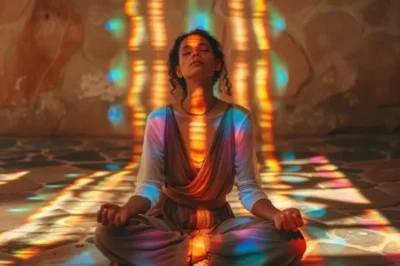
Meditation and light merge to awaken the third eye — a visual expression of intuition, energy alignment, and spiritual awakening.
Exercises to keep your third eye strong and open
The following practice is a traditional tonal meditation used to encourage focus, relaxation, and awareness of the Third Eye area. This exercise is intended as a short-term practice, performed once daily for seven consecutive days.
Tone and Mantra
The sound used in this exercise is “Thoh” (pronounced toe). The tone should be natural and comfortable, neither deep nor high-pitched—generally within a relaxed speaking or alto range. There is no need to strain or force the sound. When the tone feels steady and easy, you are likely doing it correctly.
Step-by-Step Practice
- Sit comfortably with your back straight and shoulders relaxed.
- Inhale gently through your nose and hold the breath for as long as is comfortable—without strain.
- Slightly part your teeth and place the tip of your tongue lightly between them, similar to the tongue position used when forming the “th” sound in English.
- Slowly exhale through your mouth while gently vibrating the sound “Thoh” in one continuous breath.
- Complete five repetitions in one sitting.
This practice should be performed once per day for seven days, allowing approximately 24 hours between sessions.
Sensations You May Notice
During or after the practice, some people report sensations such as:
- Gentle pressure or warmth in the forehead area
- A sense of focus or awareness behind the brow
- Relaxation in the jaw, face, or cheeks
These experiences are subjective and vary from person to person. Sensations are not required for the practice to be beneficial, and their presence does not indicate progress or success.
If at any point discomfort occurs, it is best to stop the exercise and allow the body and mind to rest.
Intuitive and Awareness-Based Effects
With regular practice, some individuals notice gradual changes such as:
- Increased intuitive awareness
- Greater clarity in thoughts or impressions
- Enhanced creativity or imagination
- A stronger sense of inner focus during meditation
These effects tend to develop slowly and naturally, and they differ widely depending on the individual and their existing sensitivity.
A Secondary Awareness Exercise
The following exercise builds upon the first and should only be practiced after allowing 10–14 days for integration. This spacing gives the mind and nervous system time to adjust.
This exercise is performed once per week and emphasizes relaxation, focus, and gentle visualization.
Preparation
- Take three slow, deep breaths.
- Hold each breath briefly, then release comfortably.
- Allow the body and mind to settle.
The Practice
- Bring your attention to the area of the Third Eye, without forcing sensation.
- Inhale deeply and hold the breath comfortably.
- As you exhale, softly vibrate the sound “May” (pronounced like the month), allowing the sound to flow out in one smooth breath.
- While exhaling, guide your attention:
- First to the forehead (Third Eye area)
- Then to the center of the head
- Finally to the top of the head (often associated with the crown chakra)
- Repeat this process five times, resting briefly between breaths if needed.
The tone should remain comfortable and unforced. Adjusting pitch naturally is fine.
What People Commonly Experience
After this practice, some individuals report:
- A sense of lightness or calm
- Gentle tingling or warmth around the head
- Heightened awareness or clarity
- A relaxed, uplifted mood
These experiences may arise immediately or later and should be viewed as temporary states, not permanent conditions.
A Final Note On Third Eye Development
Third Eye awareness develops gradually, through patience, consistency, and self-awareness. No single exercise guarantees psychic abilities or permanent changes. Instead, these practices are best approached as tools for meditation, focus, and intuitive exploration.
When practiced responsibly, they can support deeper inner awareness and complement other spiritual or meditative practices over time.
Easy Meditation For Opening Your Third Eye
Mantra Meditation Help
Lastly, check out this Meditation Made Simple link. This practice will help you develop your third eye and help keep it open as well as assist your ability to meditate much more quickly. I’ve been using it for 25 years, and recommend to all of my clients to develop their own gifts/abilities and creativity.
A Thoughtful Path Forward
Integrating Third Eye Awareness
Opening your third eye is not about forcing experiences or rushing results, but about developing awareness through patience, focus, and consistent practice. Each person’s journey unfolds differently, shaped by intention, balance, and self-observation.
When approached responsibly, these practices can support greater clarity, intuition, and inner understanding over time. Allow progress to happen naturally, remain attentive to your own experiences, and view third eye development as an ongoing process of growth rather than a final destination.